Office Clearance Lewisham - Health and Safety Policy
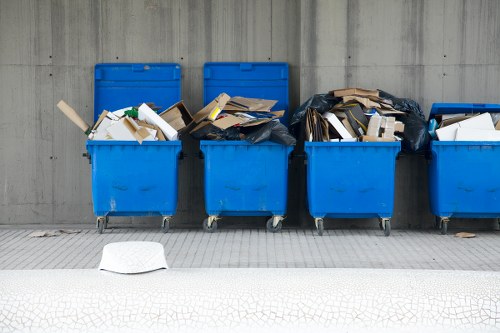 This Health and Safety policy sets out the approach adopted by Office Clearance Lewisham to manage risks related to office clearance, rubbish collection and commercial waste removal services across our service area. It applies to all employees, contractors and anyone working on behalf of the company. The purpose is to ensure a safe working environment, protect the public and the environment, and ensure compliance with statutory duties while delivering efficient clearance and rubbish removal services.
Scope: This policy covers site surveys, rubbish collection, furniture removal, recycling operations and any preparatory or post-clearance activities. It is relevant to both short-term clearances and ongoing removal contracts. Managers will ensure that every task is planned, risk-assessed and resourced so that hazards associated with manual handling, vehicle movements, waste segregation and hazardous items are minimised.
 Risk assessment and planning are core requirements before any clearance activity. Assessments must identify hazards such as sharp objects, electrical equipment, asbestos-containing materials, and chemical containers. Controls will include safe work methods, use of appropriate personal protective equipment, and ensuring that trained staff handle potentially hazardous waste. All assessments are recorded and reviewed when conditions change or new hazards are identified.
Responsibilities and Leadership
Senior management has overall responsibility for health and safety and will ensure that sufficient resources are provided. Supervisors and site managers are responsible for implementing policy on the ground, conducting pre-start briefings and ensuring that staff comply with safe systems of work. Every employee has a duty to take reasonable care of their own safety and that of others, to follow instructions, and to report hazards or incidents without delay.Training and competence: All staff involved in office clearance and rubbish removal must receive induction training, task-specific training and periodic refresher courses. Training covers manual handling techniques, correct use of lifting equipment, segregation of waste streams, safe driving practices for company vehicles, and procedures for dealing with hazardous materials. Records of completed training are maintained and audited.
 Personal protective equipment (PPE) is provided where risk assessments indicate it is necessary. Typical PPE includes gloves, safety footwear, high-visibility clothing, eye protection and respiratory protection when handling dusty or contaminated items. PPE is not a substitute for safer systems of work; it is a last line of defence and must be inspected and maintained regularly.
Safe work practices: The company enforces safe manual handling practices to reduce the risk of musculoskeletal injury. Mechanical aids and trolleys are used where practical. Employees must plan lifts, keep loads close to the body and seek assistance for heavy or awkward items. Where sharp or broken materials are present, items will be double-bagged or securely wrapped and clearly labelled to protect handlers and third parties.
Waste segregation and disposal: Office clearance operations prioritise reuse and recycling. Recyclable materials such as paper, cardboard, metals and electronics are sorted at source or at a controlled facility. Non-recyclable waste is handled according to environmental controls and transported to authorised disposal sites. The company maintains records of waste types, transfer notes and disposal destinations to demonstrate compliance with environmental and waste duty of care obligations.
Key control measures include:
- Pre-clearance surveys to identify hazards and access constraints;
- Segregation of recyclable and hazardous waste streams;
- Use of suitable containers and secure loads during transport;
- Vehicle and equipment checks before use.
Vehicle and site safety: Drivers and load handlers must ensure vehicles are appropriately loaded, with loads secured to prevent shifting. Vehicle checks are completed before each shift and defects reported. On-site, clear walkways and safe access points are established; where necessary, cordons and signage are used to protect the public and site operatives. Handovers at client sites include briefing on site-specific hazards.
Emergency procedures and incident reporting: The company maintains clear procedures for first aid, fire and chemical incidents. Incidents, near-misses and health-related absences must be reported and recorded promptly. Investigations identify root causes and corrective actions, and findings are communicated to staff to prevent recurrence. Occupational health support and appropriate follow-up are provided where necessary.
Monitoring, review and continuous improvement
Health and safety performance is monitored through regular site audits, toolbox talks and review of incident statistics. Policies and procedures are reviewed at least annually or following significant changes in operations, legislation or after a serious event. Management and employee representatives collaborate to review risk controls and introduce improvements. Continuous learning from audits and operational experience underpins our commitment to safer clearance and rubbish removal services.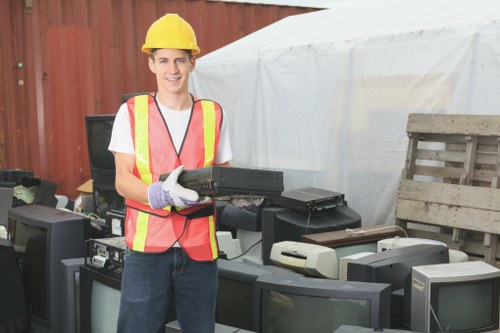 Legal and regulatory compliance: The company recognises its duty to comply with applicable health, safety and environmental legislation and codes of practice. While this policy outlines our internal standards, compliance obligations extend to statutory requirements, waste transfer documentation and transport regulations. Records are retained to demonstrate due diligence and effective management of risks related to office clearance.
 Communication and employee involvement: Effective communication ensures everyone understands their responsibilities. Staff are encouraged to participate in safety briefings, risk assessments and suggestions for improvement. Supervisors will maintain open channels for reporting concerns and employees have the right to stop work if they reasonably believe that a situation presents an imminent danger.
Conclusion: This Health and Safety policy represents the company’s commitment to safe, responsible and compliant office clearance, rubbish removal and commercial clearance operations across our service area. The policy will be implemented through effective leadership, documented procedures, training and active engagement with the workforce. It is the responsibility of all personnel to uphold these standards and contribute to a culture of safety and environmental stewardship.
