Commercial waste duties for Lewisham businesses explained
If you run a business in Lewisham, waste can't just be treated as "stuff to get rid of later". Commercial waste duties affect how you store it, sort it, collect it, record it, and hand it over. Miss a step, and suddenly a simple clear-out becomes a messy admin problem. Commercial waste duties for Lewisham businesses explained is the kind of topic that sounds dry at first, but in practice it touches everyday operations, costs, safety, and reputation.
Whether you manage an office near Lewisham town centre, a cafe, a small shop, a workshop, or a building site with mixed debris, the basics are the same: you need a sensible system and you need to know what good practice looks like. This guide breaks it down in plain English, with a local angle and enough detail to help you make better decisions without feeling buried in jargon. Let's keep it practical.
Why commercial waste duties for Lewisham businesses explained matters
Commercial waste duties matter because business waste is not handled in the same way as household rubbish. In normal day-to-day terms, that means once waste is produced by a business activity, it needs to be managed properly from the moment it leaves the floor, kitchen, office, shopfront, or site. If you are a business owner, that can feel like one more thing on a long list. But ignoring it often leads to more work, not less.
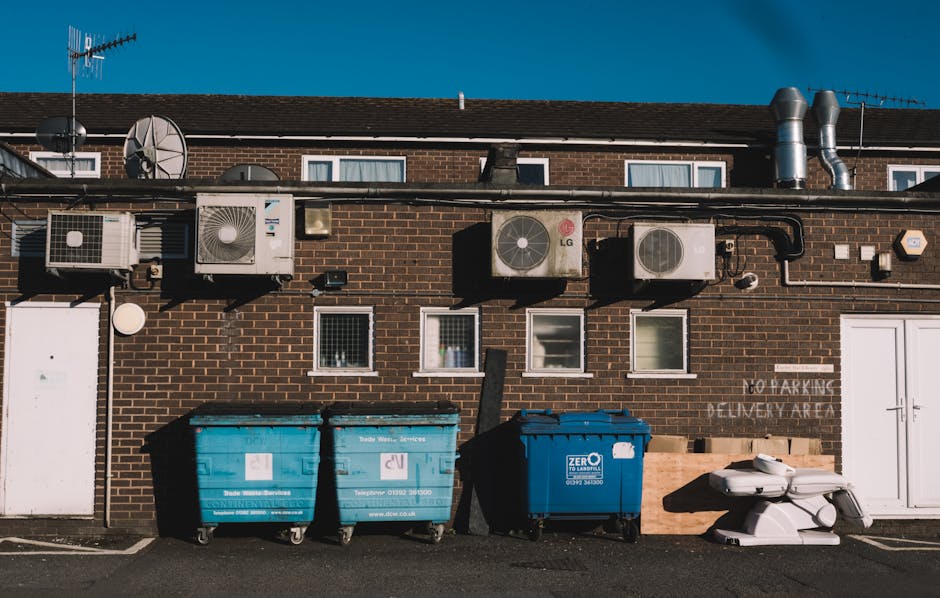
Think about a small office clearing out broken desks and old paperwork on a Friday afternoon. Someone might be tempted to leave items by the back door "until the morning". Then the rain comes, bins overflow, cardboard gets soaked, and the whole thing turns into a weekend headache. A tidy waste process avoids that. It also reduces fire risk, keeps staff movement safer, and helps your premises feel organised rather than cluttered.
For Lewisham businesses, local operating conditions matter too. Space is often limited, access can be tight, and collections need to happen without disrupting neighbours, tenants, or customers. That is why the duty side of commercial waste is not just about avoiding fines; it is about keeping the business running smoothly. To be fair, most owners only notice this when something goes wrong. Better to get ahead of it.
Key takeaway: good commercial waste management is part compliance, part housekeeping, and part reputation management. It keeps your workplace safer, calmer, and less stressful for everyone involved.
How commercial waste duties for Lewisham businesses explained works
At a practical level, commercial waste management follows a simple chain. Your business produces waste, sorts it, stores it safely, arranges collection or removal, and ensures it goes to an appropriate destination for treatment, reuse, recycling, or disposal. The details vary by waste type, but the logic is consistent.
Some waste is straightforward. Office paper, packaging, and broken furniture are familiar examples. Other waste needs extra care. Construction rubble, electrical items, confidential documents, food waste, and items with sharp edges all need more thought. If you run a mixed operation, like a retail unit with a stockroom and staff room, you may have several waste streams happening at once. That's where a simple system saves you from chaos.
In many businesses, the process works best when responsibilities are clear. One person monitors bins and contamination. Another handles collection bookings. A manager checks invoices, paperwork, or service records. It doesn't need to be fancy. In fact, the best systems are often the boring ones that everyone follows without a fuss.
If your business needs support with regular collections or one-off clearances, a dedicated service such as business waste removal can help keep things moving in a consistent, low-stress way. For larger office changes, you may also need a more specific office clearance plan so furniture, storage items, and general waste are handled properly rather than left to drift from one room to another.
Common waste streams businesses deal with
- General commercial waste: everyday non-hazardous waste from day-to-day trading.
- Dry mixed recycling: cardboard, clean paper, some plastics, and other recyclable items.
- Food waste: relevant for cafes, pubs, catering operations, and staff kitchens.
- Bulky items: desks, shelving, chairs, cabinets, counters, and display fixtures.
- Construction or refurbishment waste: plasterboard, timber, bricks, packaging, and site debris.
- Confidential or sensitive waste: documents and records that need secure handling.
Once you know what kind of waste you create most often, the rest gets much easier. That's usually the turning point.
Key benefits and practical advantages
It's easy to think of waste duties as a burden, but there are real advantages to handling them properly. The obvious one is compliance, but that is only part of the picture. A cleaner system can reduce operational friction in ways people often underestimate until they experience the difference.
First, it protects your time. If bins are overflowing, staff spend time moving bags, finding space, or waiting for someone else to sort it out. A reliable routine means less scrambling and fewer awkward last-minute calls.
Second, it can support better recycling. Mixed waste is expensive in practical terms because you lose the chance to separate reusable or recyclable materials. A clearer segregation system often means less contamination and fewer waste headaches. If sustainability is part of your business identity, that matters a lot. You may want to look at recycling and sustainability guidance if you are trying to build a greener routine rather than just a "bin it and forget it" approach.
Third, it improves the customer and staff experience. Nobody enjoys walking past torn bags, sticky bins, or a back yard that looks like it has lost a fight with cardboard. A tidy waste area says something about your standards. Quietly, but clearly.
Fourth, it lowers risk. Clear walkways, safe storage, and fewer loose materials reduce the chance of trips, pests, odours, or fire hazards. That is especially useful in compact Lewisham premises where storage space is precious.
| Benefit | What it means in practice | Why businesses notice it |
|---|---|---|
| Less disruption | Collections happen on a planned schedule | Staff can focus on work instead of moving waste around |
| Better presentation | Waste storage stays neat and contained | Customers and visitors see a more professional site |
| Safer premises | Fewer loose items and blocked exits | Lower everyday accident risk |
| Cleaner segregation | Recyclables are separated from general waste | Less contamination and better resource use |
Who this is for and when it makes sense
If you operate any business that produces waste, this applies to you. That sounds obvious, but people still miss it. A one-person design studio, a salon, a takeaway, a builder, a landlord with a commercial unit, a charity office, and a warehouse all have different waste patterns, yet they all need a system.
This is especially relevant if your business is going through a change. Maybe you are moving premises, fitting out a new office, clearing a storage room, or replacing old furniture. Maybe you have a one-off surge in waste after a refurbishment, or your regular bins are no longer coping. Those are the moments when a structured waste plan becomes less of a nice-to-have and more of a necessity.
It also makes sense if your current arrangement feels messy. If staff keep asking, "Where do I put this?" or "Who is meant to deal with that?", you already have a signal. Waste systems should reduce questions, not create them. And yes, if your waste area is the one place nobody wants to look at before lunch, that's a sign too.
Businesses that often need extra support include:
- offices with old desks, monitors, and archive clutter
- shops with packaging, display materials, and damaged stock
- hospitality venues with mixed refuse and food waste
- construction and maintenance teams handling rubble or demolition debris
- landlords and property managers clearing commercial spaces between tenants
For some of these situations, a broader waste removal service can be more practical than trying to manage one item at a time. And if you are replacing furniture as part of an upgrade, it can help to think about furniture clearance or furniture disposal in advance so old items do not block the whole job.
Step-by-step guidance
Here is the simplest way to get commercial waste duties under control without turning it into a major project. Keep it practical and build the habit. One small improvement at a time.
- Identify the waste you produce. List the main types: office waste, packaging, food, furniture, construction debris, or specialist items.
- Separate what can be reused or recycled. Cardboard, paper, and some furniture can often be handled differently from general refuse.
- Set up clear storage areas. Use labels, lids, and sensible positioning so staff know where each waste stream belongs.
- Assign responsibilities. Decide who checks bins, who books collections, and who signs off jobs.
- Choose the right collection frequency. Too infrequent and waste builds up; too frequent and you may be paying for capacity you do not use.
- Keep records and paperwork organised. Save collection details, invoices, and any service notes in one place.
- Review the system regularly. If waste volumes change, update your arrangement before the problems pile up.
That's the core of it. No drama. Just a process you can actually stick to. A lot of businesses overcomplicate this by trying to build the perfect system on day one. Better to start simple and improve it after a few weeks of real use.
If your clear-out involves multiple bulky items, a planned service such as office clearance or a targeted removal for stored items like garage clearance can save a huge amount of hassle. The key is matching the method to the waste, not forcing everything through one approach.
Expert tips for better results
In our experience, the businesses that stay on top of waste tend to do a few small things consistently rather than one big thing occasionally. It sounds ordinary because it is. Ordinary systems work.
Tip 1: Keep your waste area visible and easy to reach. If people have to squeeze past a stack of boxes to reach the bin, they will eventually leave things wherever they stand. That's just how humans are, honestly.
Tip 2: Use simple labels. "Cardboard", "general waste", and "electronics" are clearer than fancy internal codes nobody remembers. The cleaner the label, the less confusion.
Tip 3: Make contamination obvious. One stray coffee cup in a recycling bin can ruin a small batch of clean material. A quick visual check before collections is worth doing.
Tip 4: Plan for busy days. Delivery days, inventory changes, and end-of-month clear-outs create extra waste. A little advance planning stops piles forming in corridors or stockrooms.
Tip 5: Don't wait until a room is full. That is the classic mistake. By the time the cupboard, office, or back area is overflowing, you are already behind. Waste management works best when it stays slightly ahead of the mess.
Tip 6: Treat bulky waste separately. Old office chairs, broken shelving, and worn fixtures often take more thought than bagged waste. It may be more efficient to schedule a focused clearance instead of trying to move everything through routine bins.
A small but useful habit: review waste after a Monday morning. Why Monday? Because that is when bottlenecks tend to show up after a weekend, and you can spot the weak points before the week gets noisy.
Common mistakes to avoid
Most waste problems are not dramatic. They are small, repeated errors that quietly become expensive. The good news is that they are easy to fix once you can see them.
- Mixing waste streams together. This is the fastest way to make recycling harder and collections less efficient.
- Leaving waste in access routes. Corridors, exits, loading areas, and stairwells should not become temporary storage.
- Ignoring bulky items. One broken table can sit for weeks if nobody owns the problem.
- Assuming staff "just know". They probably don't. Clear instructions beat assumptions every time.
- Booking collections too late. The visible pile is usually only part of the issue. The hidden backlog is what causes stress.
- Forgetting about confidential or sensitive material. Shredding or secure handling may be necessary depending on what you produce.
Another quiet mistake is treating waste as purely an admin task. It isn't. Waste affects safety, storage, workflow, and how your business feels to people walking through the door. That's a lot for one skip bag, if we're being honest.
Tools, resources and recommendations
You do not need a huge toolkit, but a few simple resources make life much easier. Start with the basics and keep them visible.
- Bin labels and colour coding: helps staff place items correctly without thinking too hard.
- Collection calendar: a shared schedule avoids missed pickups and awkward surprises.
- Waste log: useful for tracking what is collected, when, and in what volume.
- Site map or storage note: handy for larger premises with more than one waste point.
- Clearance plan for bulky items: especially useful during relocations or refurbishments.
If your business involves regular furniture turnover, it can also help to keep a note of what is worth reusing, what can be repaired, and what should be removed. Sometimes a chair is just a chair, but sometimes it is one of twelve and the whole room feels better once it is gone. That's a small thing, but it matters.
For businesses planning bigger changes, the pages on pricing and quotes and contact us can help you think through next steps and compare options in a straightforward way. If safety is a concern during lifting or loading, it is also sensible to review health and safety guidance and insurance and safety arrangements before any job begins.
Law, compliance, standards, and best practice
This is the part people often want translated into plain English. The exact legal duties can depend on the type of business, the waste produced, and how it is stored or handed over. So it is sensible to be cautious and practical here rather than pretend every scenario is identical.
As a general rule, UK businesses are expected to manage commercial waste responsibly, prevent it from causing nuisance or hazards, and use appropriately licensed or authorised waste carriers where required. Records matter too. In real life, that means you should know who collected the waste, what it was, and when it went.
Best practice usually includes:
- keeping waste securely stored before collection
- separating recyclables from general waste where practical
- avoiding fly-tipping or uncontrolled disposal
- using clear documentation for collections and removals
- training staff so they understand the system
If your business is handling renovation or fit-out material, waste control becomes even more important. Builders' waste can be heavy, awkward, and messy in a very short time. A service like builders waste clearance is often the cleaner, safer route than leaving debris to accumulate around a site.
Food businesses and workplaces with regular consumables should also pay close attention to storage and hygiene. A bin area that smells bad at 4pm can smell much worse by 9am the next day. Nobody needs that.
Practical note: compliance is not only about avoiding trouble. It is also about demonstrating that your business takes safety and responsibility seriously. That can matter to landlords, clients, staff, and auditors alike.
Options and comparison table
Businesses usually choose between a few broad approaches. There is no single perfect answer, but there is usually a best fit for your size, waste volume, and premises layout.
| Approach | Best for | Strengths | Watch-outs |
|---|---|---|---|
| Regular scheduled collections | Ongoing waste from steady trading | Predictable, easy to manage, low disruption | Can become inefficient if volumes change a lot |
| One-off commercial clearance | Moves, refurbishments, stock room resets | Useful for bulky or accumulated waste | Needs more planning around access and timing |
| Mixed internal system with recycling focus | Businesses wanting better sustainability outcomes | Improves separation and can reduce contamination | Needs staff training and regular checks |
| Ad hoc removal | Very small or irregular waste output | Simple in the short term | Easy to delay and can create clutter quickly |
For some businesses, the right answer is a mix. Routine waste in one stream, bulky items in another, and occasional deep clearances when the premises need a reset. Nothing wrong with that. In fact, it is often the most realistic setup.
Case study or real-world example
Imagine a small Lewisham office with twelve staff, a meeting room, and a storage cupboard that gradually becomes the home for "temporary" items. Old chairs go there. Spare boxes go there. Broken monitors wait there. By the end of a quarter, the cupboard is doing the job of a second warehouse, which is never ideal.
The team decides to sort the problem properly. First, they separate clean cardboard from mixed rubbish. Then they book a planned clearance for the bulky furniture and old equipment. They create a clear collection point near the exit, label the bins, and assign one person to check the area each Friday afternoon. Nothing dramatic, just organised.
Within a couple of weeks, the office feels different. Staff stop asking where to put things. Walkways stay clear. The storage room is usable again. Someone even remarks that the place smells less like dust and forgotten paper, which is not glamorous but definitely a win.
The point is simple: once the waste system becomes visible, it is much easier to control. You do not need to overhaul the whole business. You just need to stop the quiet buildup that causes the mess in the first place.
Practical checklist
Use this as a quick internal check before your next collection or clearance. It is small, but useful.
- Have we identified the main waste streams we produce?
- Are recyclables separated from general waste where practical?
- Is the storage area tidy, safe, and easy to access?
- Do staff know what goes where?
- Are bulky items booked for removal rather than left in corners?
- Do we have a clear collection schedule?
- Are records, invoices, and service notes saved in one place?
- Have we reviewed our waste needs after recent changes?
- Are there any items that need secure or special handling?
- Is there anything currently being used as "temporary storage" that should not be there?
If you tick most of those off, you are already doing better than many businesses. If a few are missing, fair enough. That is normal. The good news is that waste systems are usually fixable quite quickly once someone owns them.
Get a free quote today and see how much you can save.
Conclusion
Commercial waste duties do not need to be complicated, but they do need attention. For Lewisham businesses, the real win is not just staying compliant; it is running a tidier, safer, more efficient workplace that wastes less time and causes fewer surprises. Once the basics are in place, the whole thing becomes much easier to live with.
Start with what you produce, separate what can be separated, keep storage sensible, and make sure everyone knows the routine. That alone solves a surprising amount. And if the job has already grown beyond a simple bin tidy, a planned commercial clearance can reset things quickly and cleanly.
Do the boring parts well, and the rest tends to follow. A little order goes a long way.
Frequently Asked Questions
What are commercial waste duties for Lewisham businesses?
They are the practical responsibilities businesses have for storing, separating, collecting, and disposing of business-generated waste properly. That includes general waste, recycling, bulky items, and any specialist waste your operation creates.
Do small businesses in Lewisham have the same waste duties as larger ones?
The basics are similar: waste must be handled responsibly and not dumped or left unmanaged. The scale changes, of course, but a small business still needs a clear system and suitable collection arrangements.
What counts as commercial waste?
Any waste produced by a business activity counts as commercial waste. That can include office paper, packaging, food waste, broken furniture, stock packaging, construction debris, and more. If the waste came from trading, it is usually commercial waste.
How should a business store waste before collection?
Store it securely, in a designated area, and keep access routes clear. Waste should not block exits, stairways, or loading areas. If items are bulky or sharp, they need extra care so staff are not put at risk.
Do I need to separate recycling from general waste?
Where practical, yes. Separating recyclables such as cardboard and paper usually helps reduce contamination and makes your system more efficient. It also supports better environmental practice, which many businesses now want to improve.
What happens if a business leaves waste lying around?
It can create safety hazards, attract pests, block access, and make the premises look untidy or neglected. It can also cause operational problems if staff or customers have to move around it.
Is a one-off clearance enough for a business?
Sometimes, but not always. A one-off clearance can solve an accumulated backlog, yet ongoing waste still needs a regular routine. Many businesses use a mix of regular collections and periodic clearances.
When does office furniture need special attention?
Whenever it is bulky, damaged, or being replaced in volume. Chairs, desks, cabinets, and shelving often need a planned removal rather than being squeezed into normal bins. That is usually the cleaner route.
How can I tell if my waste system is working well?
If waste is contained, staff understand what to do, collections happen on time, and the storage area stays tidy, that is a good sign. If people keep asking where things go, or clutter keeps building up, the system needs a review.
Should I keep records of waste collections?
Yes, that is a very sensible habit. Keep collection notes, invoices, and any service details together so you have a clear record of what was removed and when. It makes life easier if anything needs checking later.
What is the best first step if my business waste is already out of control?
Start by identifying the main waste types and clearing the bulky backlog first. Then set up simple segregation, choose a realistic collection routine, and assign one person to keep an eye on the system. Don't try to fix everything in one heroic afternoon.
Can professional clearance help with commercial waste duties?
Yes. A professional service can help with bulky waste, office clear-outs, builders' debris, or other items that are awkward to manage internally. That can free up time and reduce the chance of mistakes, especially during a move or refurbishment.
Where can I learn more about business waste support and related services?
You can review service pages like business waste removal, waste removal, and the company information on about us if you want to understand the support available and how it fits your day-to-day needs.